
How to Compare U.S. vs International Ecommerce Pricing (And Why It’s Rarely Apples to Apples)
One of the biggest mistakes international sellers make when entering the U.S. market is assuming pricing works the same way everywhere.
It doesn’t.
On the surface, comparing prices feels simple:
“What does this product cost in my country vs the U.S.?”
But in practice, U.S. ecommerce pricing is shaped by different buyer psychology, cost structures, competitive behavior, and expectations around value.
That’s why many international brands either overprice and stall or underprice and leave money on the table when they enter the U.S.
This guide walks through how to actually compare U.S. vs international ecommerce pricing—and what matters more than the number itself.
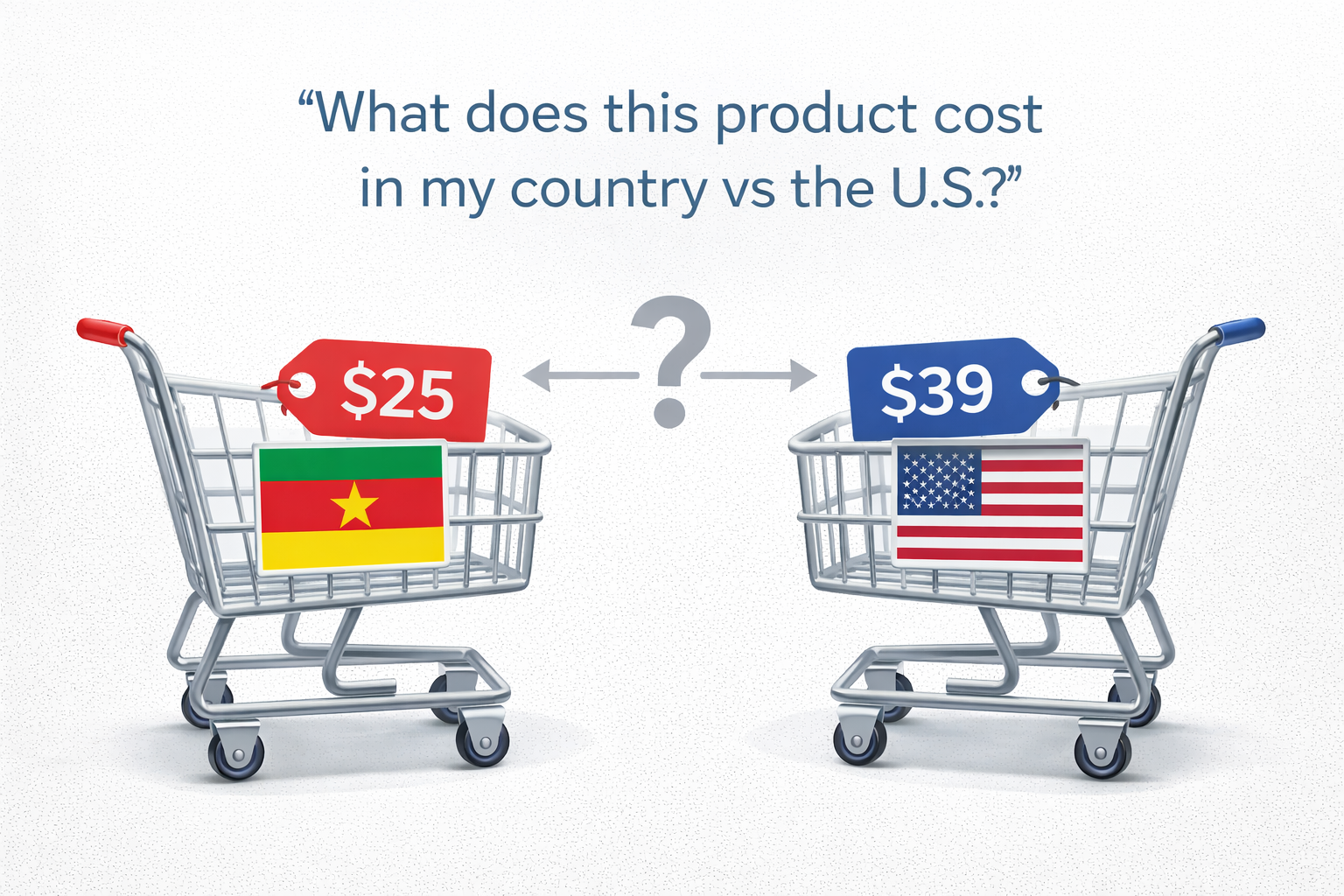
Prices vary in every country
Why Comparing Prices Across Countries Is Tricky
Two products can look identical on paper and still justify very different prices depending on the market.
The U.S. ecommerce market is influenced by:
Higher disposable income
Higher logistics and customer acquisition costs
Strong brand-driven purchasing
Greater willingness to pay for convenience and trust
So when sellers simply convert currency and stop there, the comparison breaks immediately.
Step 1: Start With Price Ranges, Not Single Prices
International sellers often ask:
“What is the price of this product in the U.S.?”
That’s the wrong question.
In the U.S., most ecommerce categories have wide acceptable price ranges, not one correct number.
Instead of looking for a single price, you should identify:
Low-end price (budget or commodity)
Mid-market price (mainstream competitors)
Premium price (brand-driven or differentiated)
Only after you understand the range can you decide where your product belongs.

Price variance
Step 2: Compare Products by Positioning, Not Features
Outside the U.S., pricing is often feature-driven:
Materials
Specs
Manufacturing cost
Technical performance
In the U.S., pricing is more often positioning-driven.
Two products with the same features may be priced very differently because of:
Brand perception
Packaging and presentation
Messaging clarity
Trust signals (reviews, guarantees, policies)
When comparing U.S. and international pricing, ask:
Is this product positioned as premium, mainstream, or budget?
What emotional or practical problem is it solving?
How confident does the listing feel?
These factors influence price far more than specs alone.
Step 3: Adjust for Logistics and Fulfillment Expectations
Shipping plays a bigger role in U.S. pricing than many sellers expect.
U.S. buyers often assume:
Fast shipping
Easy returns
Clear tracking
Responsive customer support
These expectations increase costs, which are often baked into U.S. pricing.
When comparing prices, factor in:
Fulfillment method (3PL, FBA, direct ship)
Return handling
Customer service overhead
Payment processing and fraud risk
A product priced higher in the U.S. may not be “overpriced” once these costs are considered.
Step 4: Look at Channel-Specific Pricing
Another common mistake is comparing prices across the wrong channels.
Pricing norms differ between:
Amazon
DTC (Shopify or brand websites)
Big-box retail
Specialty ecommerce stores
Wholesale or B2B platforms
For example:
Amazon often compresses prices but rewards clarity and reviews
DTC sites support higher prices when brand trust is strong
Specialty retailers tolerate higher margins for niche products
When comparing U.S. vs international pricing, always compare channel to channel, not market to market.
Step 5: Understand U.S. Buyer Psychology
U.S. ecommerce pricing is heavily influenced by how buyers feel about risk.
U.S. buyers are generally willing to pay more when:
The value proposition is clear immediately
The product feels familiar and trustworthy
The listing reduces uncertainty
The brand “sounds American” in tone and structure
This is why international sellers sometimes struggle even with competitive pricing—the product may be affordable, but it doesn’t feel safe or familiar.
Pricing and messaging are deeply connected.
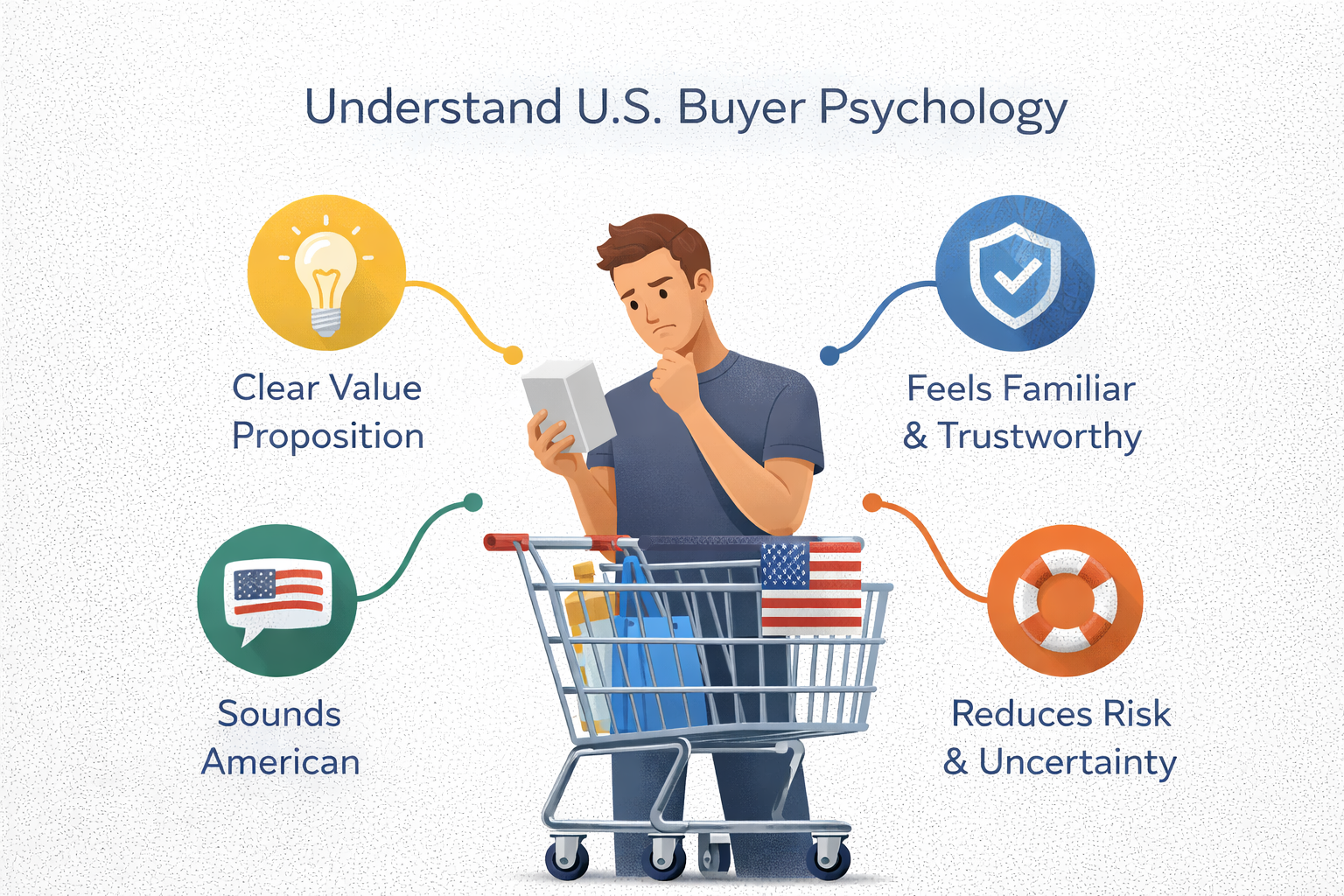
Buyer Psychology
Step 6: Identify Psychological Price Anchors
In the U.S., prices often cluster around psychological anchors:
$19.99
$29.99
$49.99
$79
$99+
These anchors vary by category, but they matter.
When comparing international pricing to U.S. pricing, look for:
Common price endings
Price jumps where competitors cluster
Points where demand drops sharply
These patterns tell you where U.S. buyers mentally draw the line.
Step 7: Validate With Real-World Price Shopping
The most reliable way to compare pricing isn’t spreadsheets—it’s observing real listings and stores.
Effective price comparison includes:
Reviewing multiple competitors across platforms
Checking in-store pricing when possible
Tracking how prices change over time
Noting discounts, bundles, and promotions
This is where many international sellers gain clarity quickly: seeing how products are actually sold, not just listed.
Common Mistakes International Sellers Make
When comparing pricing, many sellers:
Convert currency and stop
Ignore U.S. buyer expectations
Compete on price instead of positioning
Underestimate branding and messaging impact
Assume lower prices always convert better
In the U.S., underpricing can signal low quality or uncertainty, which hurts conversions just as much as overpricing.
The Bigger Picture
Comparing U.S. vs international ecommerce pricing isn’t about finding the “right” number.
It’s about understanding:
What the market rewards
Where buyers feel comfortable
How value is communicated
Which costs are hidden in the price
International sellers who take the time to understand these differences tend to price more confidently—and perform better once they enter the U.S.
Final Thought
If your product performs well internationally but struggles in the U.S., pricing is often a symptom, not the root problem.
Before changing the number, it’s worth understanding why U.S. prices look the way they do—and how buyers interpret them.